


GIACOMO PALMARO
PROJECT LIBRARIAN
Project Librarian is our 3 - years project in collaboration with AIV, started in the last months of 2022 as an academic project and currently in development.
We started as a team of three game designers, and during the first few months, after conducting market/competitor analysis and other pre-production practises, simulating industry standards, we decided to create a first-person survival horror game with a Sci-Fi setting, delivering a playable build to the best of our abilities by the end of the year.
In the second phase of development (2023/2024), our team expanded to include 3D artists, programmers, sound designers and narrative designers. This led us to completely reorganize our workflows and essentially rebuild the project from scratch, not to expand its scope but to improve its overall quality, while also catching up on everything we couldn't accomplish in the previous year.
Our current goal is to develop a polished and refined vertical slice - delivering the highest quality we're capable of - to be released as a demo on Steam in 2025.
MY ROLES
AS A
SCRUM
MASTER
MY TOOLS

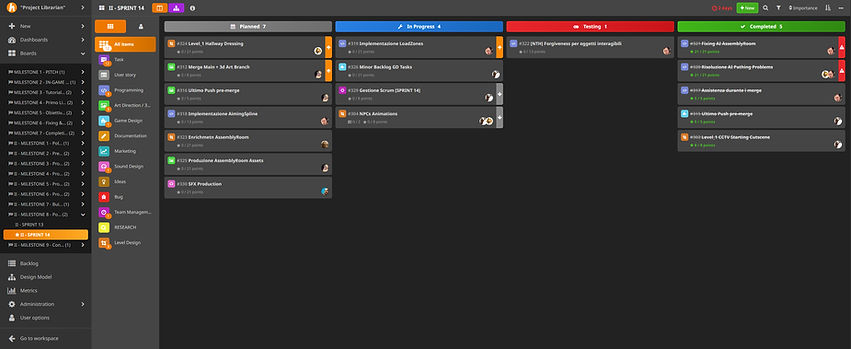
Over the past three years, I’ve ensured the proper application of the Scrum framework by organizing key ceremonies such as daily stand-ups, sprint planning sessions, and reviews. I also maintained up-to-date documentation, such as task backlogs and project boards, and tracked velocity graphs to help the team stay on course and meet our objectives efficiently.
My goal throughout was to support my teammates by organizing time, workflows, and deliverables—putting them in the best possible position to perform at their highest potential.



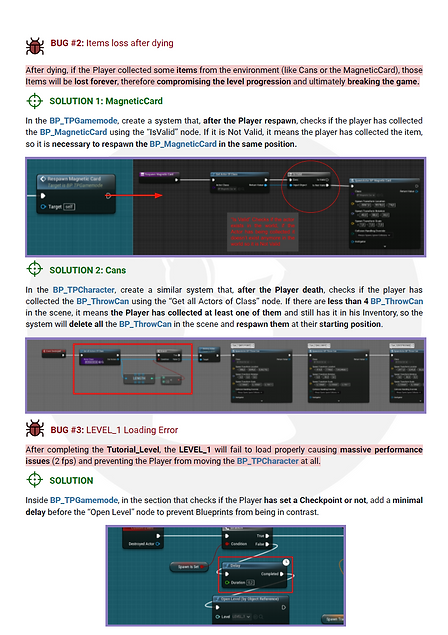
I helped the team playtesting builds and versions, providing feedbacks about features, organizing "Gym Maps" to test mechanics and to identify possible issues, while also taking care of optimization issues. I standardized best practices and kept track of all major bugs and their solutions in dedicated documents, and worked closely with each departement to ensure the desired quality.


QUALITY
ASSURANCE

MY TOOLS

I maintained the team's documentation and supported my teammates in creating reusable templates, from pre-production tools like market and competitor analysis to gameplay loops, MDA frameworks, and case studies.
Additionally, I contributed to the design of several core mechanics - such as our I.A. Finite State Machine - prototyping them both in documentation and directly in Unreal Engine 5, before pitching them to the team for feedback and iteration.
_svg.png)
_svg.png)

_svg.png)
AS A
GAME
DESIGNER
_svg.png)
MY TOOLS


REFERENCES

Collecting references from any media that may be useful, trying to identify tropes and anything that can be made in a modular way
SKETCHES

Even with so many excellent digital tools available, I often prefer to start with a sketching phase on paper to quickly visualize what I'm imagining
METRICS & PROTOTYPES

I collect metrics related to both the environments and the furniture, so I don't have to correct them later on
UNREAL BLOCKOUTS
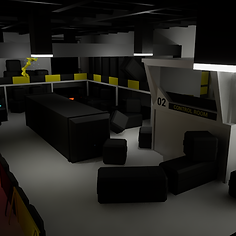
I develop the final blockout in Unreal, incorporating simple mechanics through Blueprints and beginning to implement pre-lighting that mainly involves guidance and color coding
SIMPLE 3D MODELING

FULL PROTOTYPING

I am able to produce simple modules/assets in Blender to use during the Blockout phase to improve the level's quality right from the prototyping stage
Creating a prototype of the area in SketchUp before moving to Unreal helps me visualize proportions, metrics, and any architectural errors with greater precision and clarity
Within the team I always tried to help my teammates with their tasks, regardless of their department., Doing so, I made myself available to contribute even in areas where I didn't feel particularly prepared, for example:
-
UE5 Blueprints
-
Simple Level Sequences
-
Finite State Machine I.A. design and breakdown
-
SFX research and implementation
-
Animations research and implementation (Blender and/or Mixamo)
-
Environment block-mesh and enrichment
-
U.I. implementation
This has greatly helped me understand the priorities and "language" of each department, and sometimes it has also allowed me to discover areas that I initially didn't consider much but found to be extremely interesting (ex., U.I. or Blueprints).
AS A
SWISS ARMY
KNIFE


